

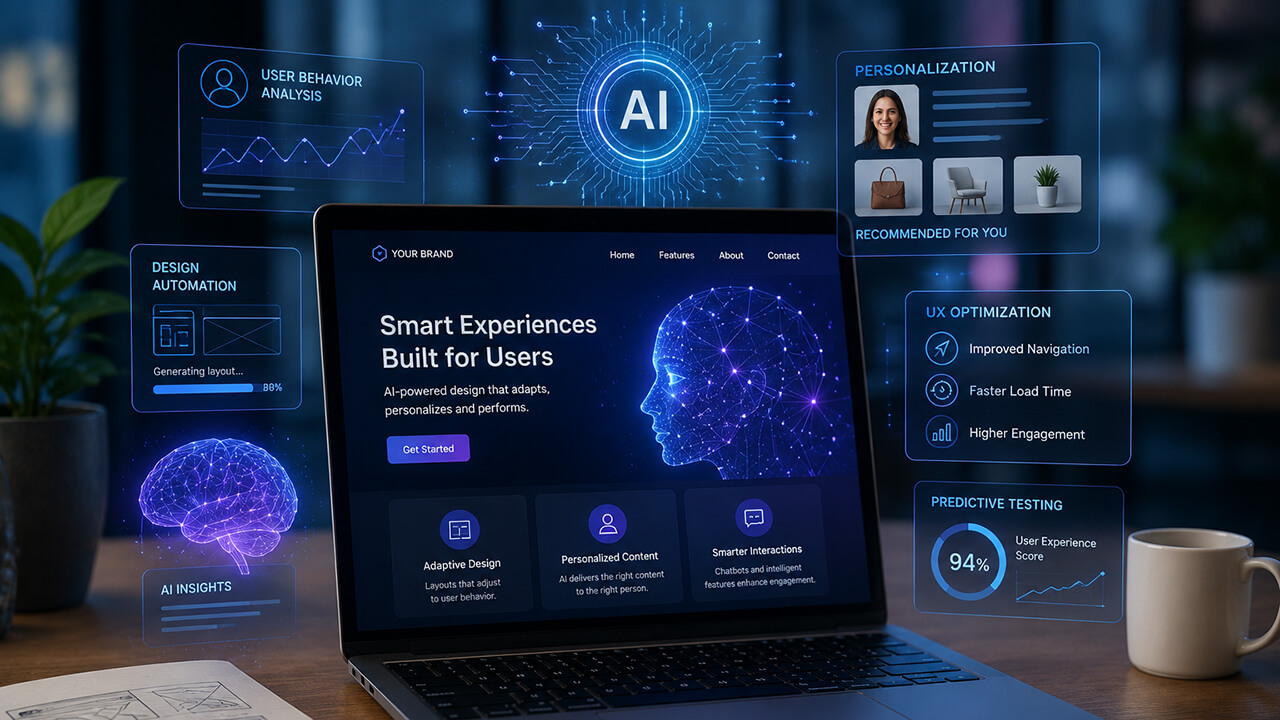
Web design used to focus mostly on appearance.
Today, it is about experience.
Visitors expect websites to load fast, understand their needs, respond instantly, and feel intuitive from the first click. That shift is where AI is reshaping modern web design in practical, measurable ways.
But AI modern web design user experience improvements are not about replacing designers. They are about enhancing how websites function, adapt, and serve users.
Let’s explore what is actually changing.
From Static Pages to Intelligent Experiences
AI web design introduces adaptability.
Modern AI tools can:
- Analyze user behavior in real time
- Adjust content recommendations
- Personalize product displays
- Optimize layout based on engagement patterns
Instead of a one-size-fits-all website, businesses can create experiences that respond to individual visitor behavior.
This shift is transforming website development from a design-first discipline into a data-informed system.
Smarter Personalization Without Crossing Legal Lines
AI-driven personalization often uses:
- Cookies
- Behavioral analytics
- Location signals
- Interaction history
Businesses must follow applicable regulations such as:
- Federal Trade Commission guidelines on data transparency
- State-level privacy laws like the California Consumer Privacy Act
- Clear cookie disclosures and consent mechanisms where required
AI can help refine user experience, but compliance remains a human responsibility.
How AI Improves Website Performance
AI enhances website design through:

Predictive UX Adjustments

Automated A/B Testing

Content Optimization
This connects directly to broader digital strategy. For deeper context on balancing automation and expertise, our post on AI vs Human SEO: Why the Best Strategy Uses Both explores how AI supports but does not replace human decision making.
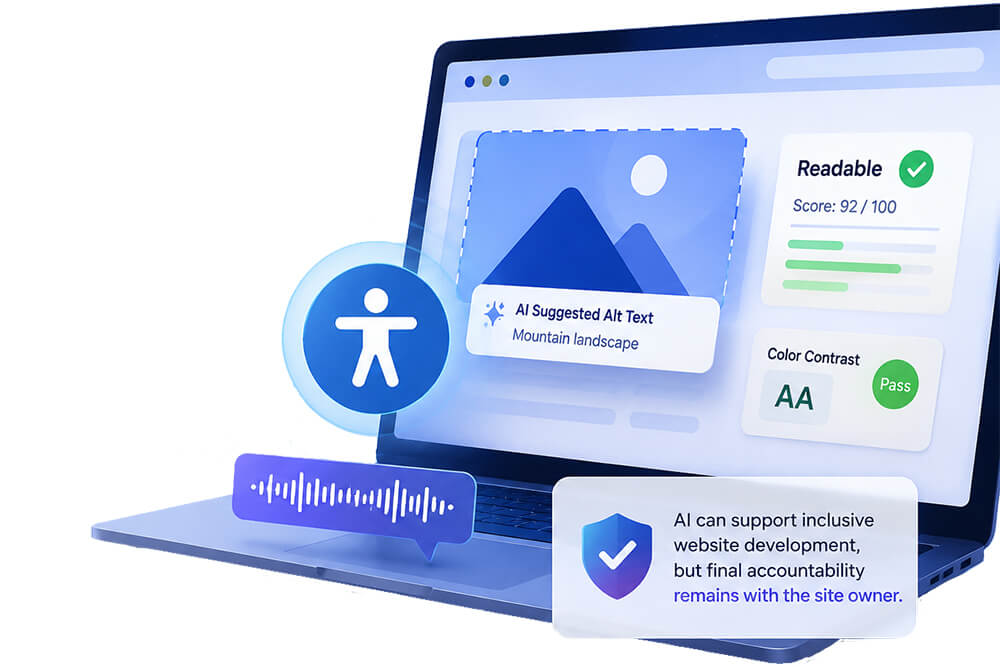
Accessibility Is Becoming Smarter
Examples include:




While AI assists with compliance, businesses must still ensure adherence to accessibility standards such as the Americans with Disabilities Act guidance for digital access and WCAG best practices.
AI can support inclusive website development, but final accountability remains with the site owner.
What Visitors Actually Notice
They notice:
- Pages that load quickly
- Forms that feel simple
- Search bars that return relevant answers
- Chat tools that respond intelligently
- Layouts that feel intuitive on mobile
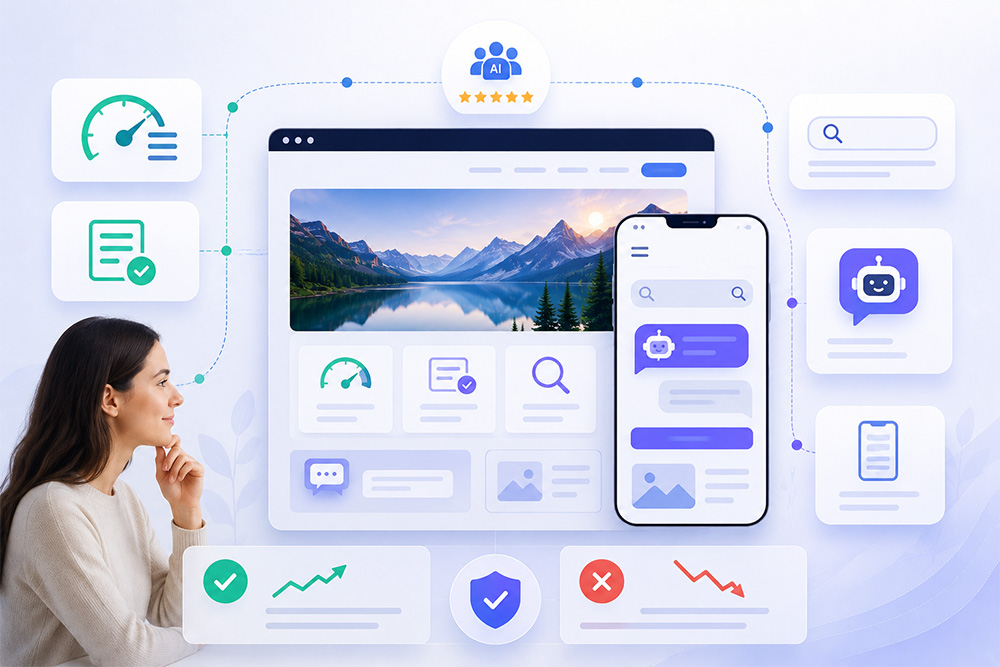
If AI improves those experiences, it strengthens trust.
If AI creates clutter, automation overload, or generic content, it weakens engagement.
The difference lies in implementation.
Common Questions Businesses Ask
Does AI replace web designers?
Is AI web design expensive?
Do small local businesses benefit from AI in website design?
Where AI Still Needs Human Oversight
They do not fully understand:
- Brand personality
- Emotional nuance
- Cultural context
- Ethical messaging decisions
For example, AI may suggest shortening content for engagement, but human review ensures clarity is not sacrificed.
Strong website development blends:
- Data insight from AI
- Creative direction from designers
- Strategic oversight from digital specialists
The Real Shift: Design That Learns
Websites are no longer static assets. They are evolving systems.
AI allows sites to:
- Adapt to visitor behavior
- Improve based on performance data
- Predict friction points
- Refine navigation automatically
That is how AI is reshaping modern web design at its core. Not by making sites robotic, but by making them responsive.
Final Thoughts
The strongest results come from combining intelligent tools with experienced oversight. That balance ensures compliance, accessibility, personalization, and performance all work together.
If you are considering upgrading your website design or exploring AI-powered improvements, now is a good time to evaluate your current digital experience. Contact us today to discuss how modern website development strategies can support smarter, more user-focused growth.