

Choosing a website platform can feel overwhelming.
With dozens of options available, it is easy to focus on features, templates, or price alone. However, the platform you choose today can affect your website’s performance, scalability, security, and marketing success for years to come.
The right choice is not necessarily the most popular platform. It is the one that supports your business goals, budget, and future growth plans.
Before making a decision, here are the key factors every business owner should consider.


Start With Your Business Goals
Before comparing platforms, think about what your website actually needs to do.
Ask yourself:
- Do you need an informational website?
- Will you be selling products online?
- Do you need appointment booking functionality?
- Will multiple team members manage content?
- Are you planning to expand your website over time?
A local service business may have very different requirements than an e-commerce store or a national company.
Understanding your goals first prevents you from paying for features you may never use.
Consider How Easy the Platform Is to Manage
Many business owners assume they will update their website regularly themselves.
In reality, some platforms are far easier to manage than others.
When evaluating a website platform, consider:
- Ease of content updates
- User-friendly dashboards
- Plugin or extension management
- Training requirements
- Ongoing maintenance needs
A platform that is simple for your team to manage can save significant time and reduce reliance on outside support.
Professional website developers often recommend solutions based on the client’s technical comfort level, not just the platform’s popularity.
Think About Future Growth
One of the most common mistakes businesses make is choosing a platform that works today but creates limitations later.
Consider questions such as:
- Can the platform handle increased traffic?
- Can additional functionality be added later?
- Does it support future integrations?
- Will redesigns require rebuilding everything?
A growing business needs flexibility.
Website design decisions should support long-term objectives rather than short-term convenience.

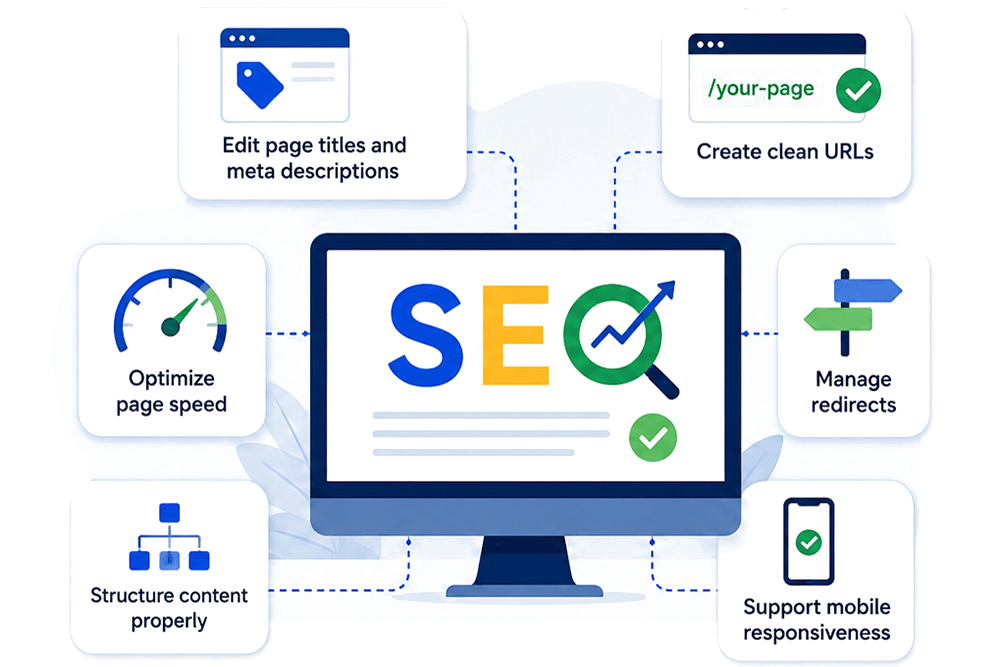
Evaluate SEO Capabilities
A platform should allow you to:
- Edit page titles and meta descriptions
- Create clean URLs
- Optimize page speed
- Manage redirects
- Structure content properly
- Support mobile responsiveness
Without these capabilities, it becomes more difficult to compete in search results.
For a broader look at how online visibility fits into your overall strategy, you may find our article on Digital Marketing in 2026: What Businesses Should Prioritize First? helpful.
Security and Compliance Matter
Businesses operating in the United States should ensure their websites follow applicable regulations regarding:
- Customer data protection
- Privacy policies
- Secure payment processing
- SSL encryption
- Cookie disclosures where required

The exact compliance requirements vary depending on industry, state regulations, and how customer information is collected.
A reputable web development agency will help ensure these considerations are addressed during the planning stage.
Compare Customization Options
Consider how much customization your business may need.
Questions to ask include:
- Can the design reflect your brand identity?
- Are custom integrations available?
- Can advanced functionality be added later?
- Are there limitations on layouts or features?
A web design company should help balance customization with usability.
More features are not always better if they make the website difficult to maintain.
Understand the True Cost
Look beyond initial setup costs and consider:
| Cost Factor | What to Consider |
|---|---|
| Hosting | Monthly or annual fees |
| Premium Features | Additional functionality costs |
| Maintenance | Updates and support |
| Security Tools | Protection and monitoring |
| Development | Future modifications |
| Integrations | Third-party software expenses |
Understanding the full cost picture helps avoid surprises later.
If budget planning is part of your decision process, our guide on How much does a website design and development service cost explains the various expenses businesses commonly encounter.
Mobile Experience Should Be a Priority
When evaluating a website platform, test:
- Mobile navigation
- Page speed
- Form functionality
- Image responsiveness
- Checkout experience (if applicable)
A strong mobile experience supports both user satisfaction and search performance.
Modern website developers prioritize mobile usability from the beginning rather than treating it as an afterthought.
Common Questions Business Owners Ask
Is there one best website platform for every business?
Should I use a website builder or hire professionals?
How often should I review my platform choice?
A Simple Decision Framework
- Define your business goals
- Identify required functionality
- Evaluate SEO capabilities
- Consider future growth
- Review security requirements
- Compare total costs
- Test mobile performance
- Assess ongoing maintenance needs
A platform that checks these boxes is far more likely to support long-term success.
Conclusion
If you are planning a new website or considering a platform upgrade, speaking with experienced professionals can help you avoid costly mistakes and make a more informed decision. Contact us today to discuss the best approach for your business and future growth plans.